

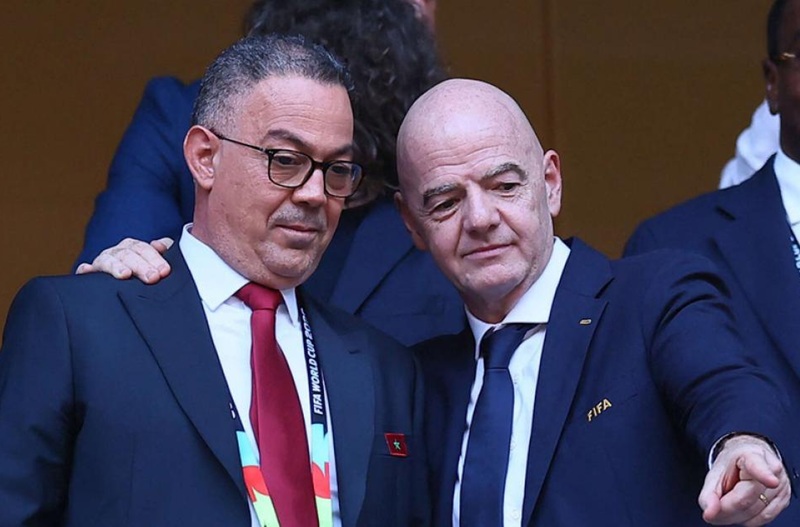
The President of the International Federation of Association Football (FIFA), Gianni Infantino, praised today the development of Moroccan infrastructure in the football sector, describing it as a model to be emulated across the African continent. Infantino’s statements came during the strategic conference of the African Football Confederation, held on Sal Island in Cape Verde, where he highlighted the significant progress made by Morocco in this vital sector.
During his speech, the FIFA president placed Morocco at the forefront of African countries that have made a qualitative leap in this regard, showcasing achievements that include establishing modern national training centers, constructing advanced stadiums and sports facilities dedicated to competitions, in addition to new headquarters for football federations. These projects are part of a broad framework aimed at advancing football in the African continent, reflecting Morocco’s strategic vision in this field.
Infantino’s remarks did not stop at praising Morocco alone; he also revealed the magnitude of the substantial investments poured by the international federation into Africa, reaching one billion dollars over the past decade, including 500 million dollars in just the last four years. These investments have contributed to the execution of 124 projects and initiatives aimed at developing football and its infrastructure, demonstrating FIFA’s commitment to supporting the growth of the game on the continent. Thanks to this support, the number of African countries capable of hosting their international matches on their soil has increased from 26 to 40 countries within two years, thanks to the development of Moroccan infrastructure and other countries that have prioritized this aspect.
In a related context, Infantino touched on the remarkable progress witnessed by African national teams on the international stage, pointing out that nine out of ten teams that participated in the 2026 World Cup advanced to the knockout rounds, which represents a qualitative leap compared to the 2018 World Cup that saw no African team progressing beyond the group stage. These impressive results underscore the effectiveness of the work done across different countries of the continent and highlight the necessity to continue supporting the development of African talent, granting them greater opportunities to shine at the highest global levels.