

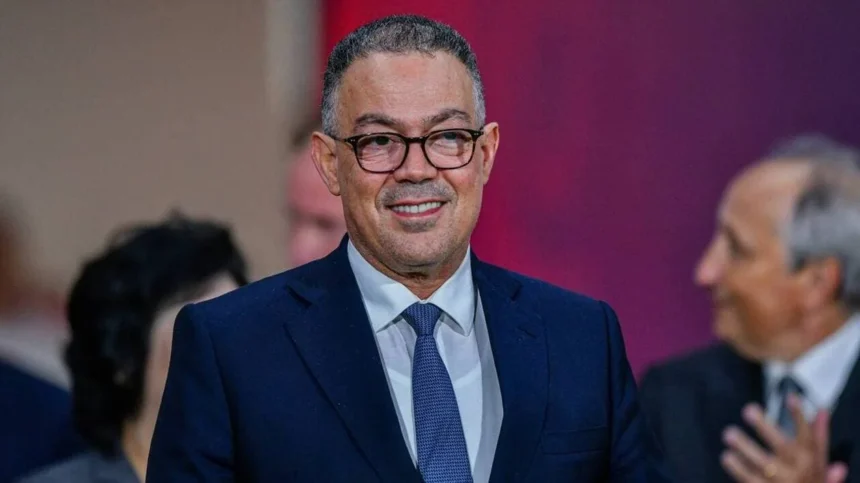
Attention is drawn to Fawzi Lekjaa’s decision to resign from the presidency of the Financial Committee at the Confederation of African Football (CAF). This decision comes amid the increasing responsibilities of the President of the Royal Moroccan Football Federation, especially with the approaching date for hosting the 2030 World Cup and the subsequent supervisory tasks and follow-up on major projects. This move raises questions about its potential impact on the African football scene.
Fawzi Lekjaa left a clear mark during his tenure as head of the Financial Committee, actively contributing to the development of financial management mechanisms and strengthening the principles of good governance. He also worked on rationalizing expenses and seeking new sources of funding with the aim of increasing revenues and reducing the financial deficit, within an ambitious plan aimed at establishing a more efficient and transparent financial management foundation within CAF.
The Financial Committee greatly benefited from Lekjaa’s extensive experience in economics and financial management. This expertise enhanced his status within the African Confederation, leading the continental body to repeatedly renew its confidence in him as committee head. This renewal was a testament to his ability to handle complex files and challenges associated with managing the budget of an institution as large as CAF.
Fawzi Lekjaa currently holds many significant responsibilities, balancing his governmental duties with his commitments as leader of the Royal Moroccan Football Federation. Additionally, he plays a pivotal role in overseeing Morocco’s preparations for hosting the 2030 World Cup, chairing the Morocco 2030 foundation. This diversity of responsibilities justifies his decision to resign from the CAF Financial Committee.
It is noteworthy that Fawzi Lekjaa will continue to serve as the first vice president of the Confederation of African Football, under Patrice Motsepe. He assumed this high-ranking position in April 2025 during the CAF Executive Committee meeting held in Ghana’s capital, Accra, affirming the continuity of his pivotal role in decision-making within the continental body.