

Raja Casablanca President’s Controversial Comparisons and the Club’s Reality
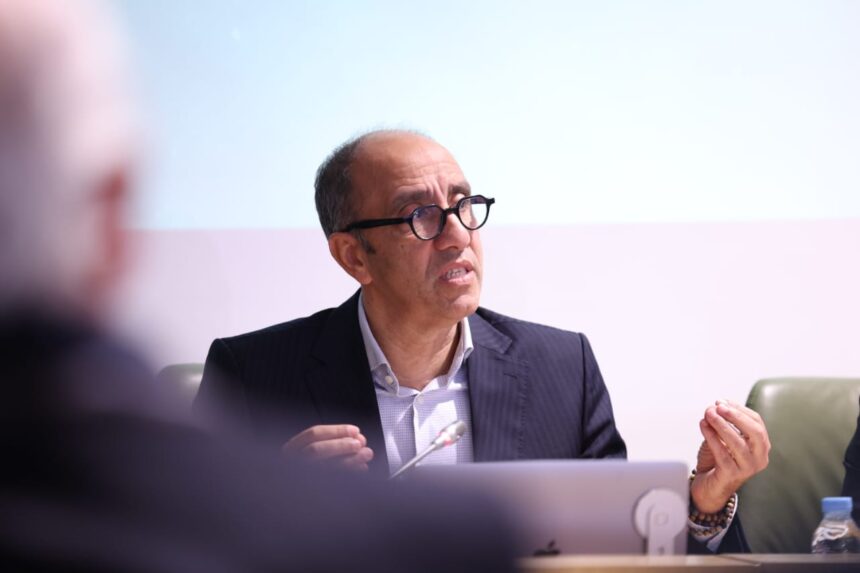
Jawed Ziyat, President of Raja Club Athletic, held an extraordinary press conference to clarify the club’s current situation, addressing athletic, financial, and managerial aspects. However, what drew significant attention was his persistent comparisons between Raja and European clubs that are vastly superior in financial capabilities. These comparisons, many argue, do not serve the team’s interests nor contribute to a realistic discussion.
Raja has endured severe financial crises for years, and Ziyat himself confirmed the club’s ambition to compete for the African Champions League title. Yet, discussing this goal loses some of its logical ground when Raja’s standing is measured against major European clubs. Comparing Raja’s transfer activity to that of Paris Saint-Germain or Barcelona overlooks the fundamental differences between these clubs, both in terms of market value and player quality.
Paris Saint-Germain, for instance, boasts players ranked among the world’s top ten according to the Ballon d’Or standings, and Barcelona also features players of similar caliber, which explains their limited transfer numbers. In contrast, Raja does not possess the continent’s elite players to justify reducing new signings. The team is still in the phase of building a squad capable of competing locally and continentally.
The true test of management, as reality dictates, will not be during the building phase, but rather when the team achieves continental prominence and its star players attract international offers. Only then will the administration’s ability to retain the team’s key players become apparent – a fundamental condition for achieving the goal of continuous Champions League contention, as stated by Ziyat himself.
From an administrative perspective, the club president considered the mutually agreed termination of numerous player contracts, without disputes, as a positive achievement. However, this cannot be seen as a managerial triumph as much as it is a necessary solution. The priority should be to market these contracts and benefit from them financially, not to divest them without compensation, especially considering that player sales revenue could have doubled some of the resources that were boasted about.
Ziyat’s vision appears to lean more towards administration than sports, at a time when Raja needs to learn from its continental rivals’ experiences, rather than comparing itself to clubs with incomparably larger budgets. Good management is a crucial factor in building financial stability, but it alone does not guarantee championship titles.
Furthermore, Raja suffers from a lack of influential representation within the Confederation of African Football and does not have voices advocating for its interests within continental bodies. Its local presence also remains limited within the Royal Moroccan Football Federation’s committees, content with merely nominal membership within the Professional League.
In conclusion, while good management may contribute to improving the club’s revenues, it alone does not forge a champion team, nor does it compensate for the absence of a comprehensive sporting vision that places Raja in its natural continental and local standing.